
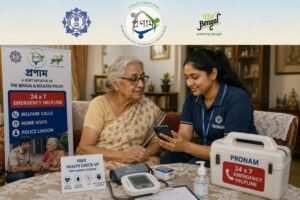
 Kolkata, September 2026: As an increasing number of elderly citizens in Kolkata live alone, concerns around their physical and emotional well-being are gaining greater attention. For seniors without immediate family support, health challenges such as hypertension, diabetes, loneliness, chronic stress and early cognitive decline can often go unnoticed until they develop into serious medical emergencies.
The challenge is not only the presence of illness, but also the absence of someone to identify early warning signs and ensure timely assistance. Regular welfare checks, health monitoring and community support can therefore play an important role in protecting seniors living independently.
Addressing this gap, The Bengal and Pronam have been working towards creating a community-driven support system that combines preventive healthcare with emergency assistance for elderly citizens.
Pronam, a joint initiative of The Bengal and Kolkata Police, provides support through its 24×7 emergency helpline, regular welfare calls, home visits and police liaison network. These services help senior citizens living alone access assistance during medical, safety or emotional distress and provide an additional layer of security in their everyday lives.
Alongside emergency support, The Bengal strengthens preventive healthcare through free health camps conducted in association with leading hospitals and healthcare professionals. These camps provide seniors with access to essential screenings such as blood pressure, diabetes, ECG and mental wellness assessments, helping identify potential health concerns at an early stage.
Together, these initiatives demonstrate how community networks can bridge the gap between prevention and emergency response. By combining regular health screening with continued welfare monitoring and rapid assistance, The Bengal and Pronam aim to ensure that elderly citizens living alone are not left without support when they need it most.
The model highlights an important aspect of elderly care: sometimes, timely intervention begins not inside a hospital, but with a simple phone call, a welfare visit or someone noticing that something is not quite right.