
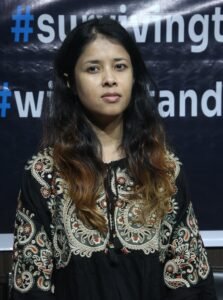
Kolkata: Mrs. Rimjhim Jain, who had spoken publicly about her personal experience of marital distress, raised broader concerns over the challenges faced by women dealing with marital betrayal, relationship breakdowns and disputes arising from alleged extra-marital relationships. She called for greater awareness, legal clarity and stronger support mechanisms to help women navigate such difficult circumstances.
Speaking at a press conference, Jain shared her experience and highlighted the emotional, social and legal difficulties that women may encounter when a marriage faces serious conflict. She also raised concerns about the difficulties involved in establishing facts and seeking appropriate legal remedies in cases where allegations of a second marriage or marital misconduct arise.
Addressing the issue, Jain said, “I am standing before you not just as a victim of a broken marriage, but as a woman who felt completely failed by the structural loopholes of our legal system. Why must a wife be forced to prove it is not her fault when her husband decides to replace her? Why does the system demand a mountain of technical evidence from a woman whose entire world has been legally and emotionally shattered?”
Jain also spoke about the existing legal framework governing marriage, adultery and bigamy, and called for greater clarity and protection for women who find themselves facing complex marital disputes. She emphasised the need for women to have access to appropriate legal guidance, emotional support and a platform to speak about their experiences without fear of social stigma.
As part of her initiative, Jain announced the ‘Surviving the Betrayal’ movement under the hashtags #SurvivingTheBetrayal and #WivesStandingTogether. The movement sought to create a collective platform for women who had experienced marital betrayal or related challenges and encourage them to come forward and share their voices.
The initiative aimed to broaden the conversation around marital relationships, women’s dignity, legal awareness and the need for stronger support systems, while encouraging women facing similar circumstances to stand together, seek appropriate assistance and advocate for greater accountability and legal clarity.