
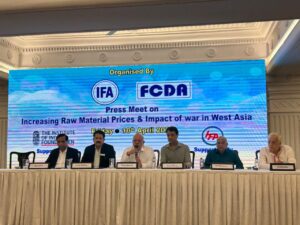
 Kolkata: Despite rising geopolitical tensions in the Middle East, particularly between Iran and the U.S., India’s pig iron prices have remained largely stable. Prices declined slightly by USD 8 to USD 405 per tonne as of March 20, 2026, ending a two-month upward trend.
Industry experts attribute this stability to India’s diversified sourcing and strong domestic production capacity. India has limited dependence on imports from Iran and primarily sources pig iron and raw materials from countries such as Russia, South Africa, and Brazil. Major domestic producers like Steel Authority of India Limited (SAIL), NMDC, and several private mini blast furnaces continue steady production, ensuring adequate supply in the market.
Weak demand for steel in key global markets including China and Europe has also kept international prices soft, offsetting potential price pressure arising from geopolitical tensions. In addition, stable coking coal prices from Australia—India’s primary supplier—have further supported price stability.
Adequate inventories at steel plants and foundries have helped prevent panic buying and sudden price spikes. Moreover, export demand remains limited, while most freight routes used by Indian suppliers avoid sensitive conflict zones such as the Strait of Hormuz, minimizing the impact of rising freight and insurance costs.
Foundries also maintain flexibility by using alternative raw materials such as scrap, Direct Reduced Iron (DRI), and sponge iron, allowing them to manage fluctuations in pig iron supply and pricing. A production surplus in 2025 had already led to inventory build-up and an 11 percent year-on-year decline in prices, which continues to cushion the market.
Vijay Shankar Beriwal, Joint Chairman of the Foundry Cluster Development Association (FCDA), said, “India’s diverse sourcing and strong domestic production shield the pig iron market from global uncertainties.” Bishwanath Agarwal, Chairman of the Indian Foundry Association (IFA), added, “Healthy inventories and alternative raw material options enable foundries to manage short-term price fluctuations without major cost increases.”
Prominent industry representatives present during the interaction included Sandip Kejriwal, Vijay Shankar Beriwal, Sumit Agarwal, Anil Madhogaria, and Sandip Dutta.
With strong domestic fundamentals and balanced demand, India’s pig iron market is expected to remain stable despite external challenges.