 At 22, the young woman had little reason to think she would soon be facing a major cardiac surgery. Newly married and otherwise healthy, she suddenly lost movement in her right arm and leg. Her family was devastated and struggled to understand how a young, healthy woman could have suffered a stroke.
Investigations revealed an unusual cause: a tumour in her heart, with a small piece believed to have broken away and travelled into the blood vessels supplying her brain. She was advised to undergo immediate open-heart surgery to remove the tumour.
But the prospect of open-heart surgery frightened her. Despite repeated counselling, she refused the procedure. Two months later, she suffered a second stroke. This time, she lost much of her ability to speak and eat, while her heart function had also fallen to 35%. Once again, open-heart surgery was advised. Once again, she refused.
Over the next three months, her condition continued to deteriorate. She weighed only 35 kg, was weak and withdrawn, and required feeding through a Ryle’s tube. Her husband continued looking for another option.
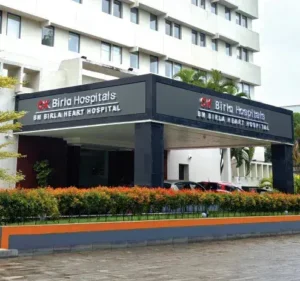
A neighbour eventually suggested that the family consult a doctor in Kolkata who performed robotic heart surgery. The family approached Dr Soumya Guha, Cardiothoracic and Vascular Surgeon, BM Birla Heart Hospital, initially through an online consultation, as the young woman was unwilling to visit a hospital.
Dr Soumya Guha said, “This was an extremely high-risk case. She had already suffered two strokes, her heart function had come down to 35%, she was severely underweight at 35 kg and was physically very weak. The tumour was also large. Given her condition and the complexity of the surgery, I was initially reluctant to take up the case for robotic heart surgery. But the family was desperate, and we felt that if we could first improve her physical condition and prepare her psychologically, we could give her a chance. She needed to be built up before we could think of taking her safely through such a major procedure.”
The team therefore spent time preparing her for surgery, working to improve her nutritional and physical condition while counselling her repeatedly to help her overcome her fear of surgery. Once she was considered ready, she was brought to Kolkata.
The surgery presented another unexpected finding. What had been thought to be a single cardiac tumour turned out to be two tumours in the heart. Both were removed using robotic heart surgery.
Given her small body size, weakness and small blood vessels, the procedure required additional precautions during cardiopulmonary bypass. The team used artificial conduits to establish bypass and employed NIRS monitoring along with multiple filtration modes to support her during the procedure.
Her recovery was also a major part of the treatment. Following surgery, she underwent extensive physical rehabilitation along with speech and swallowing therapy. Nursing, intensive care, physiotherapy, dietary support and ward care were all part of the recovery process, with the hospital administration also providing financial assistance to the family.
Today, the young woman is able to stand and walk on her own. She has begun speaking a few words and has progressed from Ryle’s tube feeding to eating small amounts of mashed food.
For her family, the change has been remarkable: from watching a young woman suffer two strokes and gradually lose her ability to speak and eat, to seeing her prepare to return home on her own feet.
Dr Guha further noted, “The surgery was only one part of this patient’s journey. Given how weak she was, getting her through the operation safely was important, but helping her regain movement, speech and swallowing afterwards was equally important. This required the efforts of the surgical and anaesthesia teams, perfusionists, nursing staff, ICU and ward teams, physiotherapists, speech and swallowing rehabilitation and the dietician. The support from the hospital administration also made a difference to the family. Every one of these teams had a role to play in getting her to where she is today.”